Egg barbecues are kamado grills, a style of cooker named after the Japanese word for a stove. Clay cookers like this have been used for centuries. The modern version swaps clay for thick, glazed ceramic with a domed lid, a hinge, a felt or fibreglass gasket and two vents that control the air.
The ceramic is what makes an egg barbecue different from a steel kettle like a Weber. It soaks up heat, holds it and gives it back evenly, so the food cooks like it would in an oven. Less air gets in too, which keeps meat moist and means you burn far less charcoal than on an open grill.
Most people know the shape from the Big Green Egg, the American brand that made the shape famous after it started in Atlanta in 1974. Today plenty of makers build a ceramic kamado in the same style, often with stands, side shelves and accessories included.
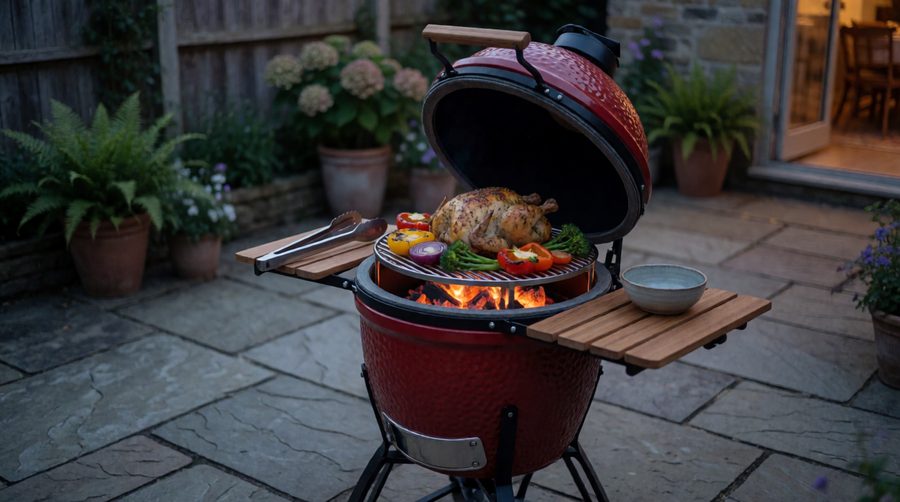
The Big Green Egg is the original and still the name most people search for. It comes in sizes from the MiniMax to the XL with a lifetime warranty on the ceramic. You buy it through a network of authorised dealers rather than general online shops. That's why you won't see one in the range above.
So what do the other eggs offer? Kamado Joe, Kamado Bono and Ynni Kamado all make heavy ceramic BBQ grills that work the same way, with two vents, a fire box and a heat deflector for indirect cooking. Kamado Joe's Classic and Big Joe models add a slide-out ash drawer and a split-level Divide and Conquer cooking system. Kamado Bono offers a lifetime guarantee on its ceramic. Ynni Kamado gives 20 years.
A green egg isn't automatically the best one. Pick on size, build and what's in the box, then choose the colour you like. Kamado Joe is known for its Blaze Red. Ynni and Kamado Bono both make green, red and black versions.
Start with how many people you usually feed. The number that matters is the diameter of the cooking grid, not the outside of the egg. Big Green Egg's own size guide is a handy yardstick.
The eggs above line up neatly against those. A 33cm or 34cm cooking surface, like the Ynni Kamado 15.7 inch or the Dellonda DG235, is a small egg for a couple or a small outdoor space. The Kamado Bono Media's 43cm grate and the Kamado Joe Classic's 18 inch surface are close to a large egg. The Ynni XL's 56cm grate and the 24 inch Big Joe are for big gatherings.
Caught between two sizes? Go bigger if you can. The extra room lets you set up a hot side and a cool side, which makes it easier to cook meat and sides at the same time.

Here's how the eggs in our range measure up, using the makers' own figures.
| Egg BBQ | Cooking surface | Weight | Worth knowing |
|---|---|---|---|
| London Sunshine Cadet | 27.5cm | 21kg | 82°C to 399°C, portable enough to move |
| Kamado Joe Joe Jr | 13.5 inch (34.3cm) | 34.3kg | Cast iron stand, ceramic heat deflector |
| Ynni Kamado 15.7 inch | 34cm | 38kg | Spare parts available for 20 years |
| Dellonda DG235 | 33cm | 40kg | Cover, heat deflector and grid gripper included |
| Charles Bentley Searsmith | 38.3cm | 62kg | Bamboo side shelves, wheels and a cover |
| Kamado Bono Media | 43cm | 94kg | A family size egg for four or five |
| Kamado Joe Classic II | 18 inch (45.7cm) | 105kg | Divide and Conquer, cart with locking wheels |
| Kamado Bono Grande | 49cm | 100kg | Dual-zone cooking, stainless steel handles |
| Ynni Kamado XL 25 inch | 56cm | 108kg | Stainless steel inner parts, room for a crowd |
| Kamado Joe Big Joe III | 24 inch | 201.85kg | Three cooking racks on a galvanised cart |
Weight is the figure people forget. A large ceramic egg is very heavy (a small one is easier to carry), so if you'll want to move it around the garden, look for a stand with locking wheels.
An egg is a grill, smoker and outdoor oven in one. Open both vents and the charcoal roars to searing heat for steaks. Close them right down and it settles at around 110°C for pulled pork or brisket that cooks for hours without much fuss.
Big Green Egg calls its heat deflector the ConvEGGtor. Other brands simply call it a deflector plate. Most of the eggs here include one. It's the piece that turns a ceramic BBQ from a grill into an oven, so it's worth checking it's in the box.

Ceramic eggs sit in a stand, which decides how easy the grill is to live with. On a Big Green Egg the stand is called the Nest. Its Modular Nest system goes further and builds the egg into an outdoor kitchen with shelves and cabinets. You can also buy a ready-made bundle with the stand and accessories together.
Most eggs on Amazon come with a steel stand. Many bigger ones add wheels and folding shelves too. If you'd rather have a proper outdoor table to cook at, look at our BBQ fire pit tables or a built-in masonry BBQ for ideas on where to set it.
Put it on a level patio away from fences, sheds and overhanging branches. And keep it outside. RoSPA warns never to use a barbecue in a tent, caravan, garage, awning or even on a balcony, because of the fire risk and carbon monoxide.
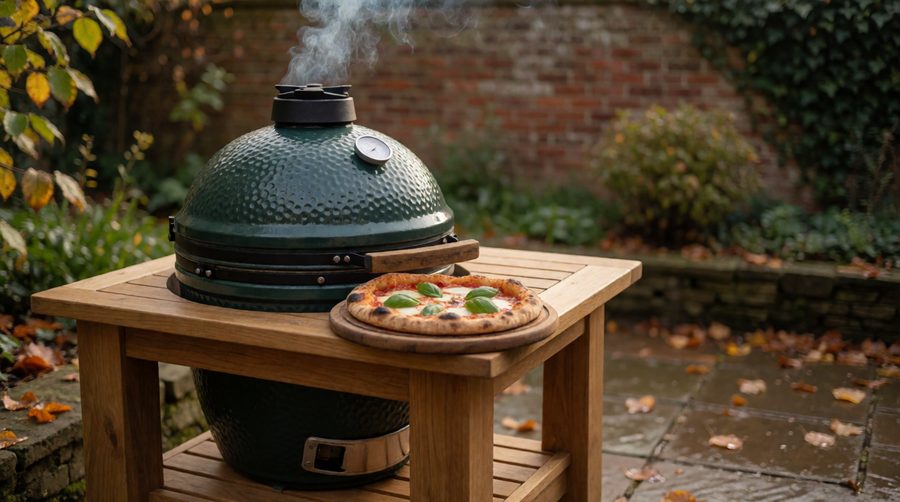
Use lumpwood charcoal rather than briquettes, which leave more ash. Ynni Kamado recommends lump charcoal for its eggs and most other makers say the same. Light it with a natural firelighter, leave the lid up for about ten minutes, then close it and use the vents to steer the temperature.
The bottom vent lets air in and the top vent lets it out. Open them both for heat, then close them a little at a time as you get near the temperature you want. It's much easier to bring an egg up to heat than to cool it back down, so creep up slowly.
Most eggs reach grilling heat in around 15 to 20 minutes. That's a little slower than turning on a gas grill, which is why some people keep one of our dual fuel BBQs for quick weeknight burgers as well.

Ceramic doesn't rust, which is one reason a ceramic grill can last for years. But it can crack if it's dropped or heated too fast from cold, so warm it up steadily on the first few cooks.
Check the cover before you buy, because it varies a lot. Kamado Joe offers a limited lifetime warranty, Ynni gives 20 years on the ceramic and the Charles Bentley Searsmith covers its shell for seven years against structural cracks.

An egg suits you if you love cooking outside, want one grill that smokes, roasts and bakes. You'll also need to be happy lighting a charcoal BBQ. It cooks all year round because the thick ceramic shrugs off cold weather.
If you mainly want quick food on a busy evening, a gas grill is simpler. Browse our 4 burner BBQs or stainless steel BBQ grills for that. And if you've set yourself a budget, our BBQs under £1000 and BBQs under £500 include small and large eggs alongside gas and charcoal models.
For two people a 33cm to 34cm cooking surface is plenty. For a family of four to six, look for something around 43cm to 46cm. Bigger eggs of 56cm or more suit anyone who regularly feeds a crowd.
Not really, though it takes a few cooks to learn how the vents behave, but once you know the settings it holds a temperature for hours with very little attention.
Yes. The ceramic walls keep the heat in on a cold day, so lots of owners cook roasts and even Christmas dinner on one. Keep it covered between cooks so rain stays out of the vents.
It's best not to. RoSPA lists balconies alongside tents and garages as places a barbecue shouldn't go. Charcoal gives off carbon monoxide. The NHS explains the symptoms to look out for.
Not much at all. The ceramic is so well sealed and insulated that a small load of lumpwood goes a long way. You can often relight what's left over for the next cook.